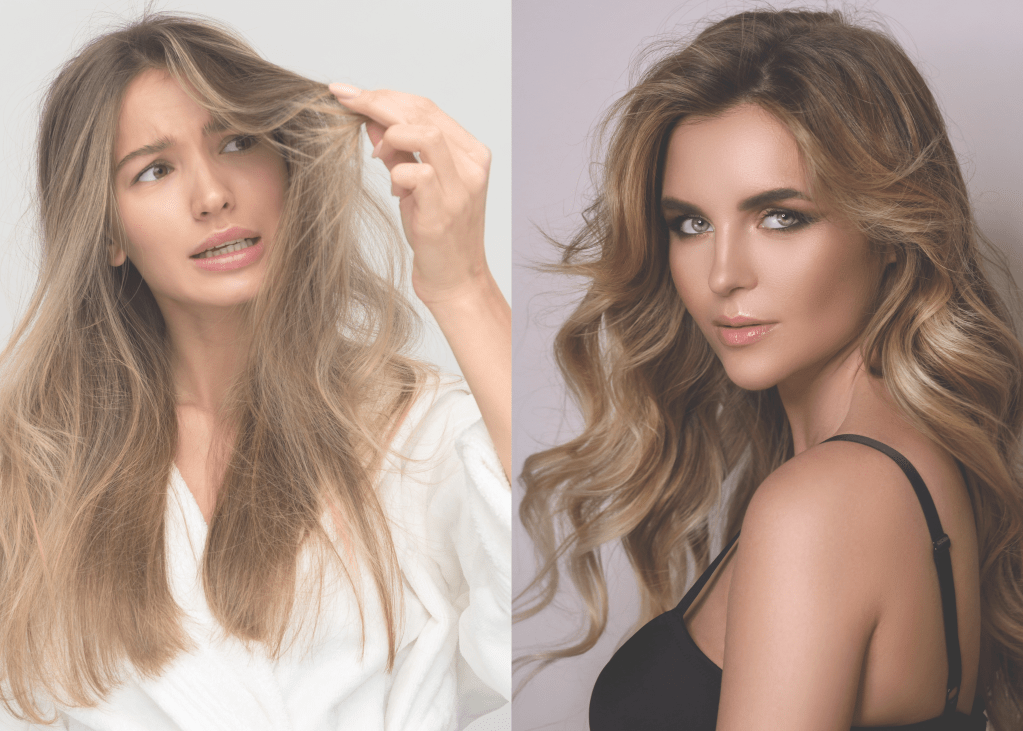
In our fast-paced world, stress has become an unwelcome companion in many of our lives. While we’re often aware of how stress affects our mood and mental well-being, its impact on our physical appearance – particularly our skin and hair – is frequently overlooked. Today, we’re diving deep into the fascinating (and sometimes alarming) ways that stress can affect your skin and hair health. So buckle up now, because what you’re about to learn might just convince you to prioritize that stress-management routine you’ve been putting off!
Understanding Stress-Related Skin Problems
You might have noticed that during particularly stressful periods, your skin seems to rebel against you. It turns out there’s a scientific reason for this, and it all starts with how our bodies respond to stress.
How Stress Triggers Skin Inflammation
When we’re stressed, our bodies release a cocktail of hormones, with cortisol taking center stage. While cortisol has its uses (like helping us react quickly in dangerous situations), too much of it can wreak havoc on our skin. One of its primary effects? Increased inflammation.
Inflammation is like your skin’s alarm system – it’s trying to protect you, but when it goes into overdrive, it can cause more harm than good. This stress-induced inflammation can make your skin more reactive, exacerbating existing skin conditions and potentially triggering new ones. If you’ve ever noticed your skin becoming more sensitive or prone to redness during stressful times, now you know why!
Stress and Skin Barrier Function: What You Need to Know
Our skin functions like a protective shield. It keeps harmful things away from the outside world and helps our body stay hydrated by keeping water inside. But stress can be like a wrecking ball to this vital barrier. When we’re stressed, the production of lipids and other compounds that maintain our skin’s protective layer can be disrupted. The result? Your skin’s protective shield becomes weaker, so irritants cause problems more easily and your skin is less able to retain moisture.
This weakened barrier function can lead to a host of skin issues:
- Increased dryness and flakiness
- Greater sensitivity to skincare products and environmental factors
- More frequent flare-ups of conditions like eczema
If you’ve ever felt like your usual skincare routine suddenly starts irritating your skin during stressful periods, this could be why.
The Greasy Side of Stress: Excess Oil Production
While some people experience dryness due to stress, others might find themselves battling an oil slick. This is because stress can stimulate our sebaceous glands to produce more sebum (the skin’s natural oil). While a little oil is good for keeping our skin supple, too much can lead to clogged pores and – you guessed it – acne breakouts.
This explains why you might notice an increase in pimples when you’re under pressure. It’s not just your imagination – stress really can make you break out!
Stress-Induced Slow Healing: Impact on Skin Recovery
Have you ever noticed that cuts or blemishes seem to take longer to heal when you’re stressed? You’re not imagining things. High stress levels can actually impair your skin’s ability to repair itself. This means that not only are you more likely to develop skin issues when stressed, but your skin also has a harder time bouncing back from damage.
This slower healing process can be particularly frustrating if you’re dealing with acne or other skin conditions that involve healing and recovery.
Premature Aging: How Stress Accelerates Skin Aging
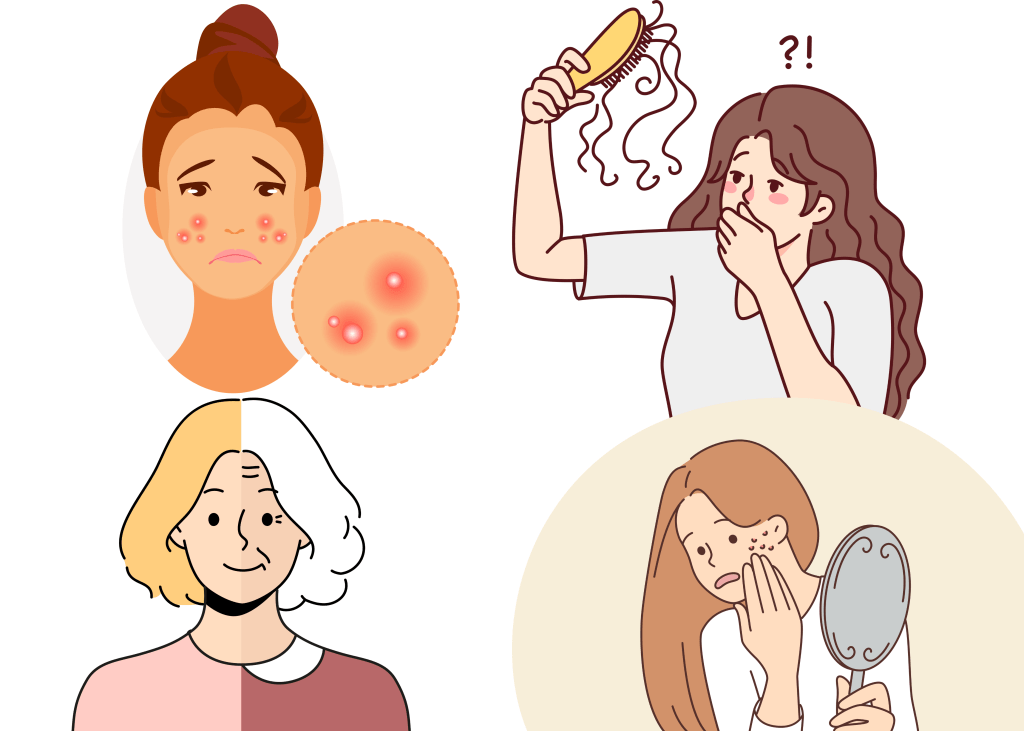
We all want to age gracefully, but chronic stress might be pressing the fast-forward button on your skin’s aging process. Stress can damage two important proteins in your skin, collagen and elastin, which ensure that your skin is strong and elastic. The result? More fine lines, wrinkles, and a loss of that youthful elasticity we all cherish.
While aging is a natural process, chronic stress can accelerate it, potentially making you look older than your years. It’s yet another reason to take stress management seriously!
Common Skin Conditions Triggered by Stress
For many people, stress isn’t just about a few extra pimples or fine lines. It can trigger or exacerbate a range of more serious skin conditions:
- Acne: As we’ve discussed, increased oil production can lead to more breakouts.
- Eczema: Stress can trigger flare-ups of this itchy, inflammatory condition.
- Psoriasis: Many people with psoriasis report stress as a major trigger for their symptoms.
- Rosacea: Stress can cause flushing and worsen rosacea symptoms.
- Hives: Stress can trigger these itchy, raised welts on the skin.
- Seborrheic dermatitis: This scaly, flaky skin condition often worsens during times of stress.
If you suffer from any of these conditions, managing your stress levels could be a key part of managing your symptoms.
Stress and Hair Health: The Hidden Connection
It’s not just your skin that suffers from stress – your hair can suffer too. Let’s explore how stress can affect your locks.
When Stress Makes Your Hair Fall Out
One of the worst effects of stress on the hair is hair loss. This can manifest itself in various ways:
- Telogen effluvium: This is a fancy term for diffuse hair loss. Stress can put a large number of hair follicles into a resting phase, leading to widespread hair loss. The good news? This type of hair loss is usually only temporary, as hair often grows back as soon as the stress subsides.
- Alopecia areata: This is an autoimmune disease that causes patchy hair loss. Although the exact cause isn’t known, stress is thought to be a major trigger for many people.
If you notice more hair in your brush or on your pillow during stressful times, this could be the reason. Remember that some hair loss is normal, but if you’re worried about excessive hair loss, it’s always best to consult a dermatologist.
Does Stress Really Cause Gray Hair?
We often joke about stress turning our hair gray, but there might be some truth to this old wives’ tale. While more research is needed in humans, animal studies have shown that stress hormones can deplete the pigment-producing stem cells in hair follicles. This means that stress could potentially accelerate the graying process.
Of course, genetics play a significant role in when we go gray, but managing stress might help you hold onto your natural color a bit longer.
Scalp Health: How Stress Affects Your Hair’s Foundation
Your scalp is skin too, and it’s not immune to the effects of stress. Stress can trigger or worsen various scalp conditions:
- Dandruff: That pesky flaking might get worse when you’re under pressure.
- Itching: Stress can make your scalp feel itchy and uncomfortable.
- Seborrheic dermatitis: This condition, which causes scaly patches and stubborn dandruff, often flares up during stressful times.
Your scalp is like the soil in a garden – if it’s healthy, your hair can grow strong and beautiful. So if stress is causing problems with your scalp, it can affect how your hair looks and feels overall. Taking care of your scalp is an important part of keeping your hair looking its best!
Stress Management for Healthier Skin and Hair
Now that we’ve painted a rather stress-inducing picture of how stress affects your skin and hair, let’s talk about what you can do about it. While it’s not always possible to eliminate stress from our lives entirely, there are ways to mitigate its effects on your skin and hair:
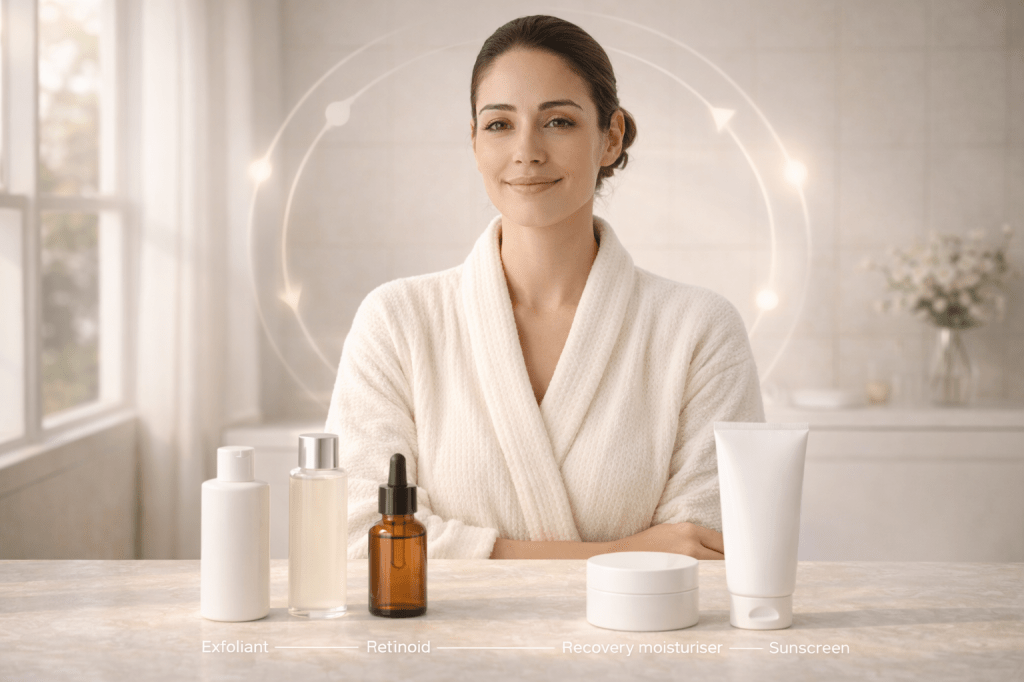
- Stick to a consistent skincare routine: Even when stress makes you want to skip your routine, don’t. Cleansing, moisturizing, and protecting your skin can help counteract some of stress’s negative effects.
- Practice stress management techniques: Meditation, yoga, deep breathing exercises – find what works for you and make it a regular part of your routine.
- Get moving: Regular exercise is a great stress-buster and promotes overall health, including that of your skin and hair.
- Prioritize sleep: Adequate sleep is crucial for stress management and allows your skin time to repair and regenerate.
- Eat a balanced diet: Nutrient-rich foods can help support your skin and hair health from the inside out.
- Keep your water bottle handy: Drinking water throughout the day will keep your skin happy and moisturised – and it’s great for your whole body too!
- Consider professional help: If stress is significantly impacting your life, don’t hesitate to seek help from a therapist or counsellor.
Remember that everyone’s skin and hair are different, and what works for one person may not work for another. If you’re experiencing persistent skin or hair issues, it’s always best to consult with a dermatologist for personalized advice and treatment.

The Mind-Body Connection: Holistic Approach to Beauty
As we’ve explored, the connection between our mental state and our physical appearance is strong and undeniable. Stress doesn’t just affect how we feel – it can show up on our skin and in our hair in very real, visible ways.
By understanding this connection, we can take a more holistic approach to our beauty routines. Taking care of our mental health isn’t just good for our minds – it’s good for our skin and hair too. So the next time you’re tempted to skip that yoga class or stay up late working, remember: your skin and hair will thank you for taking that time to de-stress.
In our quest for healthy, glowing skin and lustrous hair, managing stress might just be the most powerful tool in our beauty arsenal. It’s time to make stress management a non-negotiable part of our self-care routines. After all, true beauty starts from within – and that includes a calm, centered state of mind.
 EverGlow Bliss
Leave a comment