
Starting a basic skincare routine doesn’t have to be complicated or expensive. If you’ve ever felt overwhelmed browsing the aisles of a beauty store or scrolling through endless product recommendations online, you’re not alone. The truth is, an effective beginner skincare routine requires just a handful of products used consistently — not a bathroom counter full of bottles.
Let’s break down exactly what you need, why you need it, and how to build a routine that works for your unique skin.
Why Keep It Simple?
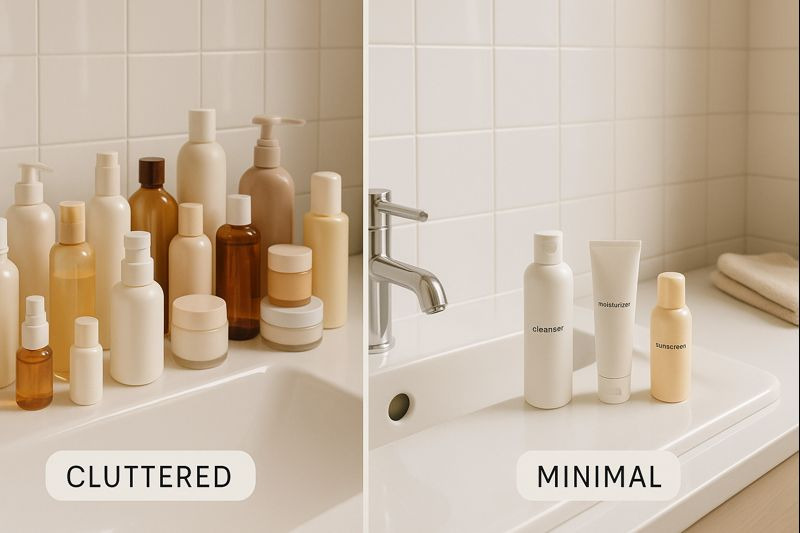
Your skin has a natural protective barrier that keeps moisture in and irritants out. When you’re just starting out, the goal is to support this barrier function, not overwhelm it with too many active ingredients at once. A minimalist approach lets you understand how your skin responds to each product before adding complexity.
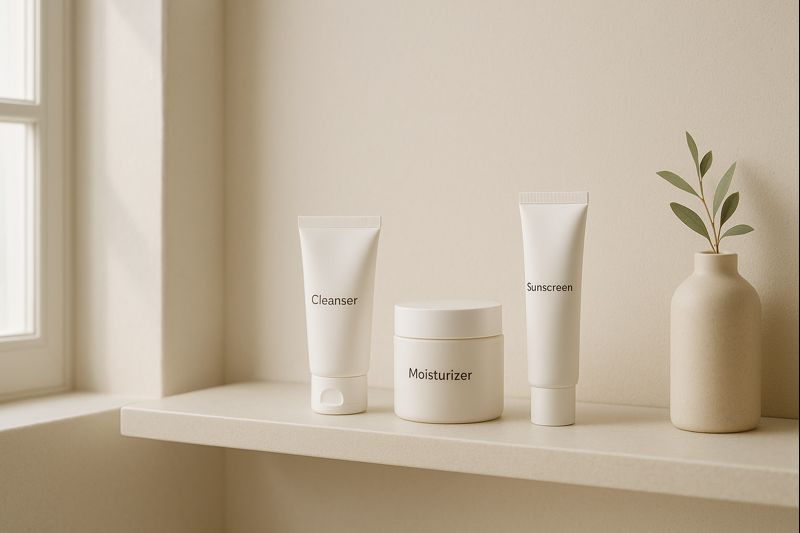
Think of it like learning to cook: you master the basics before attempting elaborate recipes. The same principle applies to skincare.
The Three Essential Steps
Every beginner needs just three core products to start:
Cleanser – Removes dirt, oil, and impurities without stripping your skin
Moisturizer – Hydrates and reinforces your skin’s protective barrier
Sunscreen – Shields against UV damage that causes premature aging and pigmentation
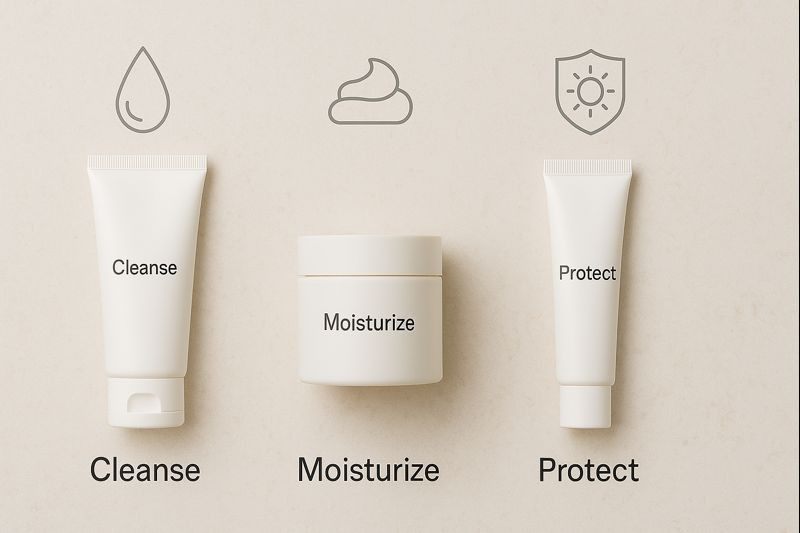
That’s it. These three steps, performed consistently, will do more for your skin than a drawer full of trendy products used sporadically.
Understanding Your Skin Type
Before shopping for products, take a moment to determine your skin type. This knowledge guides you toward the right product textures and formulations.
Here’s a simple test: cleanse your face, skip all products, and wait three to four hours. How does your skin feel?
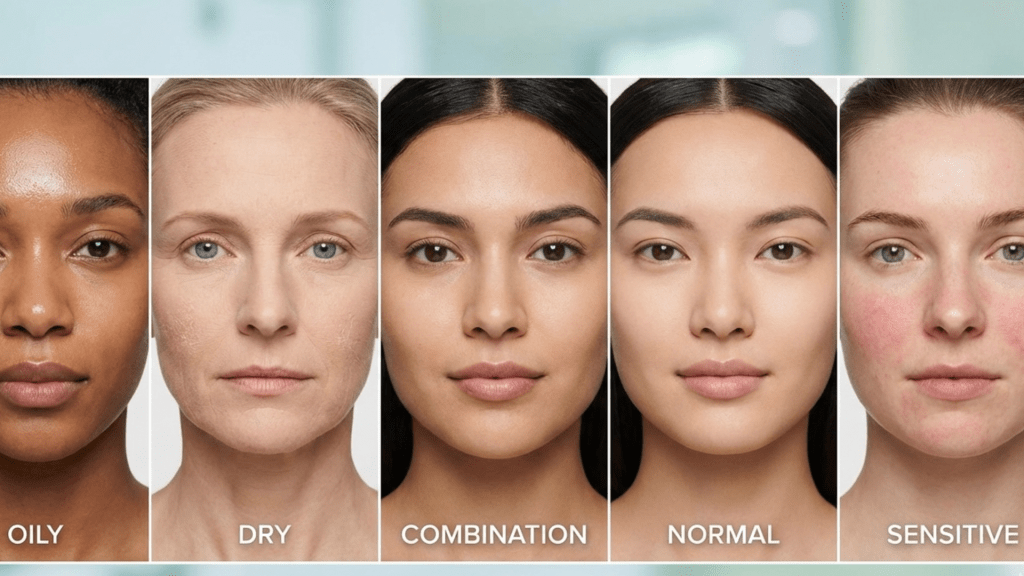
Oily skin appears shiny, especially in the T-zone (forehead, nose, chin), with visible pores and a tendency toward breakouts. You’ll benefit from lightweight, gel-based products.
Dry skin feels tight or uncomfortable, may look dull or flaky, and craves richer moisture. Cream-based products with hydrating ingredients work best.
Combination skin is oily in the T-zone but normal or dry on the cheeks. You might need different products for different areas, or you can split the difference with a balanced lotion.
Normal skin feels comfortable without excess oil or dryness. Lucky you — most products will work well for your skin type.
Sensitive skin reacts easily to products or environmental changes, often with redness, stinging, or irritation. Stick with fragrance-free, hypoallergenic formulas with minimal ingredients.
Step 1: Choosing and Using a Cleanser
Cleansing removes the day’s buildup of oil, sweat, pollution, and product residue. The key word here is “gentle.” Your cleanser should clean effectively without leaving your skin feeling tight, squeaky, or stripped.
Avoid bar soaps and harsh foaming cleansers that can disrupt your skin’s pH balance and damage its protective barrier. Instead, look for formulas described as gentle, hydrating, or pH-balanced.
Affiliate disclosure: As an Amazon Associate, I earn from qualifying purchases
<< See Face Cleansers on Amazon >>

How to cleanse properly:
Wet your face with lukewarm water — hot water can be irritating and drying. Dispense a small amount of cleanser into your palms and gently massage it onto your skin for about 30 seconds, paying attention to areas where oil and dirt accumulate. Rinse thoroughly and pat (don’t rub) your face dry with a clean towel. Double cleansing is another option but it requires two steps – the use of an oil-based cleanser and a water-based cleanser.
Cleanse twice daily: once in the morning to refresh your skin and once at night to remove the day’s accumulation. If you wear makeup or water-resistant sunscreen, you may eventually want to add a cleansing balm or oil as a first step in the evening to dissolve these products before your regular cleanser.
Step 2: Moisturizing Matters
Even if you have oily skin, you need a moisturizer. When skin is dehydrated, it can actually overproduce oil to compensate, potentially making breakouts worse.
For oily or combination skin: Choose a lightweight gel or lotion labeled “non-comedogenic” (won’t clog pores) or “oil-free.”
For dry skin: Opt for a richer cream containing hydrating heroes like glycerin, hyaluronic acid, ceramides, or shea butter.
For sensitive skin: Prioritize “fragrance-free” products specifically formulated for sensitive skin, with short, simple ingredient lists.
<< See Face Moisturizers on Amazon >>
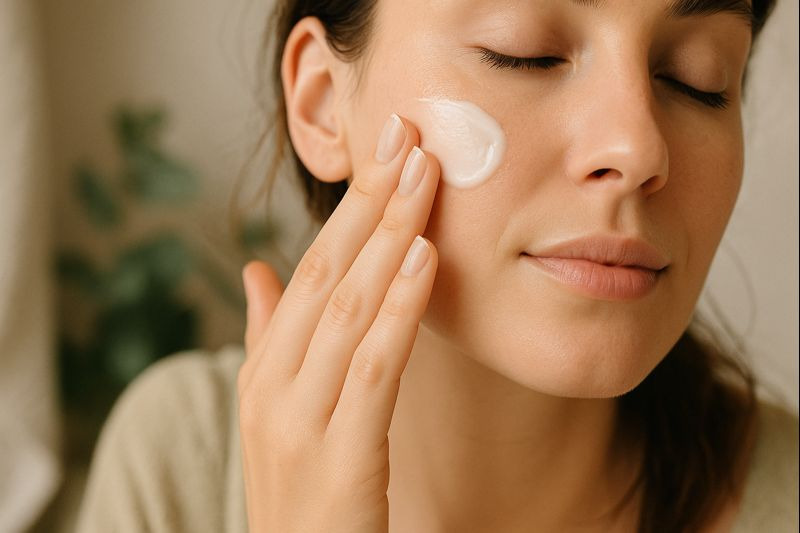
Apply your moisturizer to slightly damp skin — this helps lock in that extra hydration. Use enough to cover your face and neck comfortably without feeling greasy or heavy. Your skin should feel soft and comfortable, not suffocated.
Both morning and night, apply moisturizer immediately after cleansing while your skin is still slightly damp.
Step 3: Sunscreen Is Non-Negotiable
If you take away just one message from this article, let it be this: sunscreen is the most important anti-aging product you’ll ever use.
Daily sun protection prevents premature aging (wrinkles, fine lines, sagging), hyperpigmentation, and reduces your risk of skin cancer. It’s more valuable than any expensive serum or trendy treatment.
Look for a broad-spectrum sunscreen with at least SPF 30. “Broad-spectrum” means it protects against both UVA rays (aging) and UVB rays (burning).
<< See Sunscreens on Amazon >>
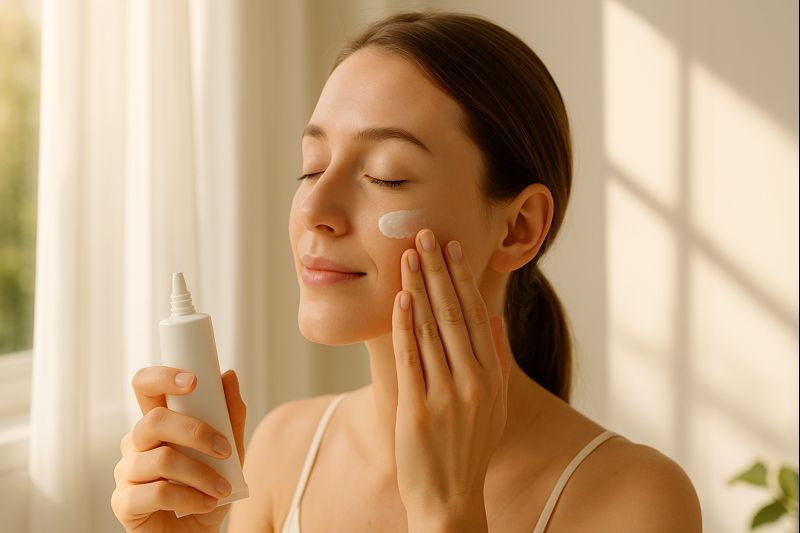
Application tips:
Use sunscreen as the final step of your morning routine, after moisturizer. Apply generously — most people don’t use enough. A rough guide is about two finger-lengths worth of product for your face and neck.
Reapply every two to three hours if you’re spending time outdoors, sweating, or in direct sunlight. If you’re mostly indoors, your morning application should suffice, but reapply if you go out for lunch or errands.
Your Basic Routine Layout
Morning:
- Gentle cleanser
- Moisturizer
- Broad-spectrum sunscreen (SPF 30+)
Evening:
- Gentle cleanser
- Moisturizer
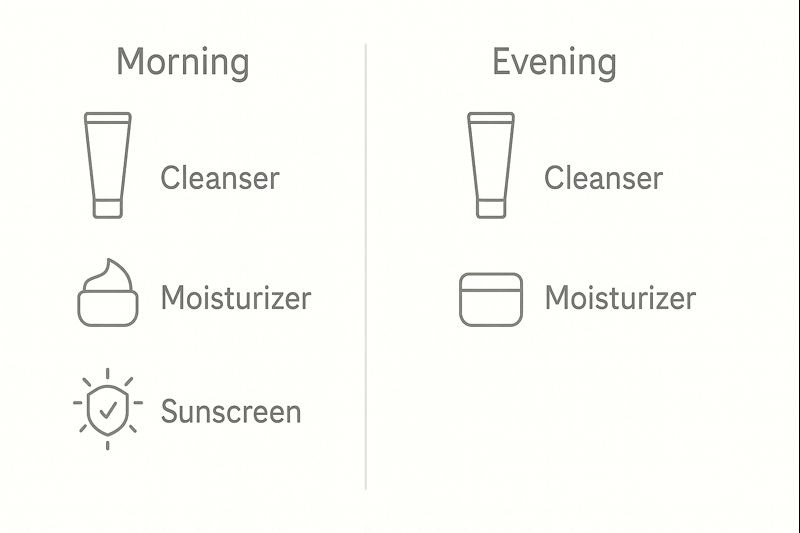
That’s your foundation. Stick with this routine for at least four to six weeks. This gives your skin time to adjust and allows you to establish whether the products work for you without interference from too many variables.
When to Add Extra Steps
Once your basic routine feels stable — no burning, stinging, or unexpected breakouts — you can consider introducing additional products if you have specific concerns.
Gentle chemical exfoliant (salicylic acid for oily/acne-prone skin, or lactic acid for dry/sensitive skin): Use one to two nights per week to address clogged pores or dullness.
Targeted serums: Vitamin C for brightening and antioxidant protection, niacinamide for oil control and pore appearance, or additional hydrating serums with hyaluronic acid.
<< See Vitamin C Serums on Amazon >>
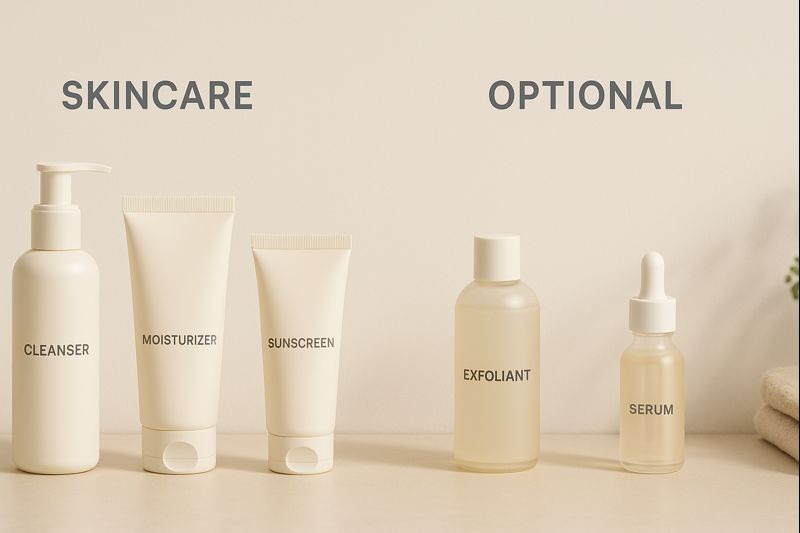
The golden rule: introduce only one new active ingredient at a time. Use it a few times per week initially, gradually increasing frequency if your skin tolerates it well. If you experience irritation, stop using the product immediately.
Common Beginner Mistakes to Avoid
Using too many products too soon: More isn’t better. Start simple and build slowly.
Switching products too frequently: Give each product at least four to six weeks to show results.
Skipping sunscreen: No excuses. Make it a habit.
Over-exfoliating: Physical scrubs and harsh exfoliants can damage your skin barrier. If you exfoliate, do so gently and infrequently.
Ignoring your neck: Your neck shows aging just like your face. Apply all your products down to your neck and décolletage.
The Bottom Line
Building a skincare routine as a beginner doesn’t require a massive investment or complicated multi-step process. Start with the holy trinity: cleanser, moisturizer, and sunscreen. Use them consistently, give them time to work, and only add more products when you’ve established a stable foundation.

Remember that skincare is a marathon, not a sprint. The most luxurious product in the world won’t help if you don’t use it consistently. Stick with your simple routine, be patient, and your skin will thank you.
Ready to start? Pick up these three essential products suited to your skin type, commit to using them daily, and watch your skin transform over the coming weeks.


 EverGlow Bliss
Leave a comment