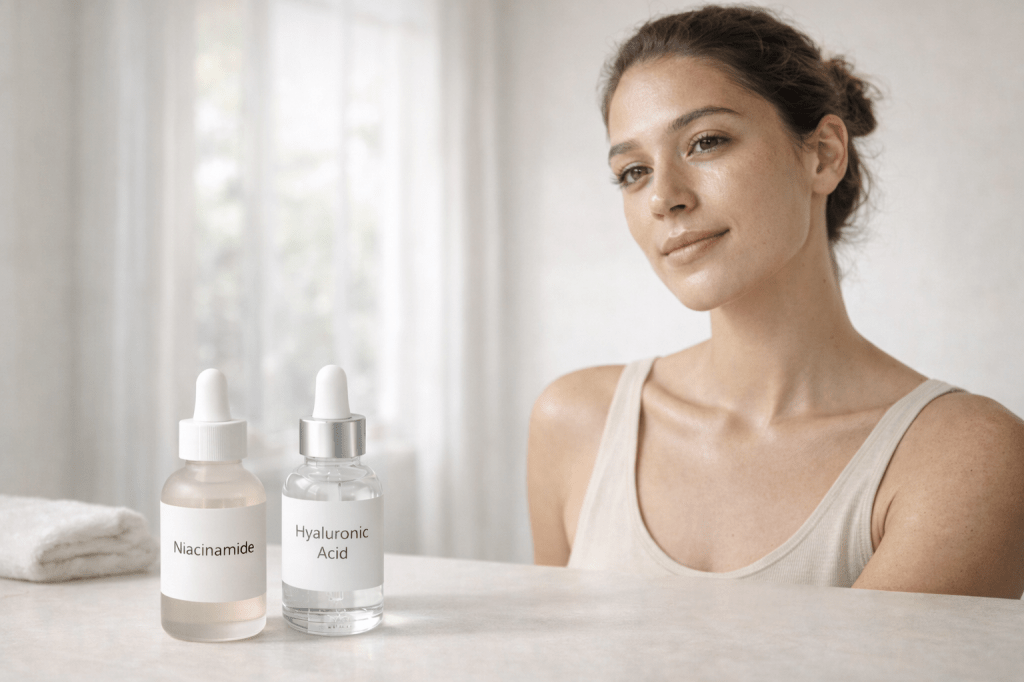
If you’ve ever found yourself staring at skincare labels wondering whether to reach for niacinamide or hyaluronic acid, you’re not alone. These two powerhouse ingredients have become staples in modern skincare routines, but they work in completely different ways. The good news? You probably don’t have to choose just one.
Let’s break down what each ingredient actually does for your skin, who needs what, and how to use them together for maximum benefits.
Understanding the Basics: What Each Ingredient Does
Niacinamide: Your Skin’s Multi-Tasking Guardian
Niacinamide, also known as vitamin B3, is like that reliable friend who can handle just about anything you throw at them. This versatile ingredient works beneath the surface to strengthen your skin’s natural protective barrier by boosting ceramides and lipids — the essential building blocks that keep moisture locked in and irritants locked out.
What makes niacinamide particularly impressive is its broad range of benefits. It tackles inflammation and redness, helps regulate excess oil production, minimizes the appearance of enlarged pores, and can even address stubborn concerns like acne, post-acne marks, hyperpigmentation, and fine lines. Think of it as your skin’s all-purpose problem solver that gets better with consistent use.
*Affiliate disclosure: As an Amazon Associate, I earn from qualifying purchases
<< See Niacinamide Serums on Amazon >>
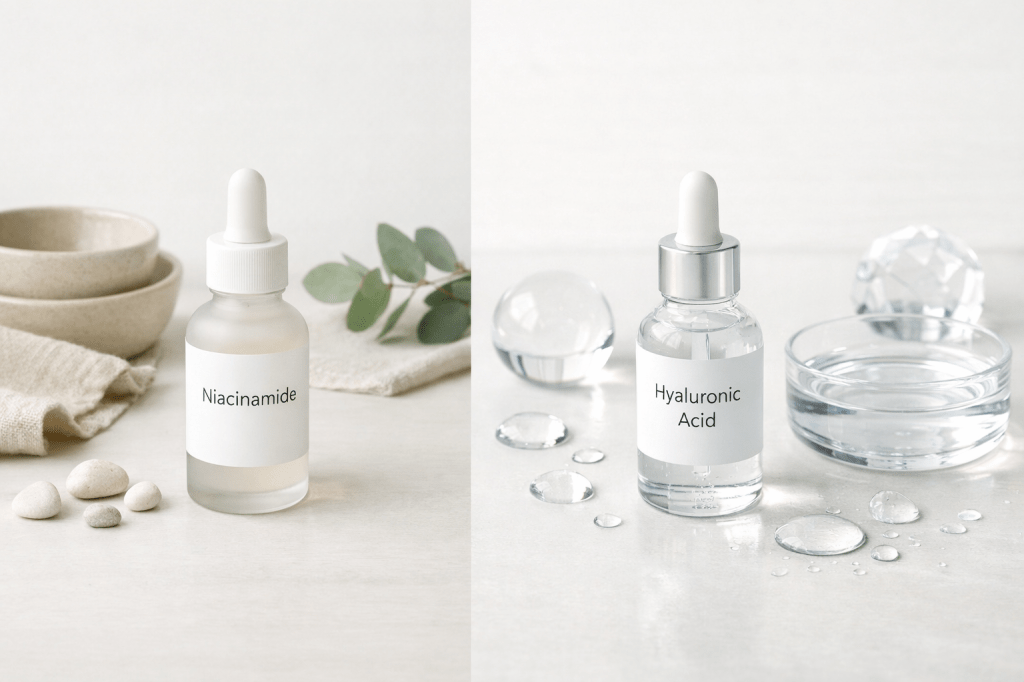
Hyaluronic Acid: The Ultimate Hydration Hero
Despite its intimidating name, hyaluronic acid (HA) is actually one of the gentlest, most universally loved ingredients in skincare. It’s a humectant, which means it acts like a moisture magnet, pulling water from the air and deeper skin layers to the surface.
Here’s the impressive part: hyaluronic acid can hold approximately 1,000 times its weight in water. That exceptional ability translates to immediate hydration and that coveted plumping effect that makes skin look dewier and healthier. Beyond instant gratification, HA also improves skin smoothness and elasticity, softens the appearance of fine lines and wrinkles, and supports wound healing and barrier health. It’s suitable for virtually every skin type, including sensitive and acne-prone skin.
<< See Hyaluronic Acid Serums on Amazon >>
Which Ingredient Does Your Skin Actually Need?
Signs You Need Hyaluronic Acid
Your skin is practically begging for hyaluronic acid if you notice:
- A tight, uncomfortable feeling, especially after cleansing
- Dullness or a lack of that healthy glow
- Temporary dehydration from environmental factors like air travel, harsh weather, or heating/air conditioning
- Fine lines that seem more pronounced when your skin feels dry
- A desire for immediate plumpness and smoother texture without heavy creams
Hyaluronic acid is ideal when your primary concern is hydration. It works across all skin types and won’t clog pores or feel greasy, making it perfect for anyone seeking lightweight moisture.
Signs You Need Niacinamide
Niacinamide should be your go-to if you’re dealing with:
- Excessive oil production throughout the day
- Enlarged-looking pores, particularly in your T-zone
- Frequent breakouts or acne-prone skin
- Post-inflammatory hyperpigmentation or dark spots from previous blemishes
- A compromised skin barrier from over-exfoliation or harsh products
- Persistent redness or irritation
- Uneven skin tone or texture that you want to improve gradually
Niacinamide excels at addressing multiple concerns simultaneously while building long-term skin health. It’s particularly beneficial for combination, oily, or reactive skin types.
Strategic Choices: One vs. Both
When to Focus Primarily on Hyaluronic Acid
Start with hyaluronic acid as your main activity if your skin is predominantly dry or dehydrated but otherwise fairly balanced. If you’re not particularly concerned about issues like pigmentation, acne, or enlarged pores, and you simply want deep hydration and a healthy, plump appearance, HA alone might be sufficient for your needs.
When to Focus Primarily on Niacinamide
Prioritize niacinamide if you have a combination to oily skin, deal with acne or breakouts, or experience frequent redness. Niacinamide offers comprehensive support that addresses multiple concerns at once while providing long-term benefits for skin barrier strength and tone improvement.
The Power Duo: Using Both Together
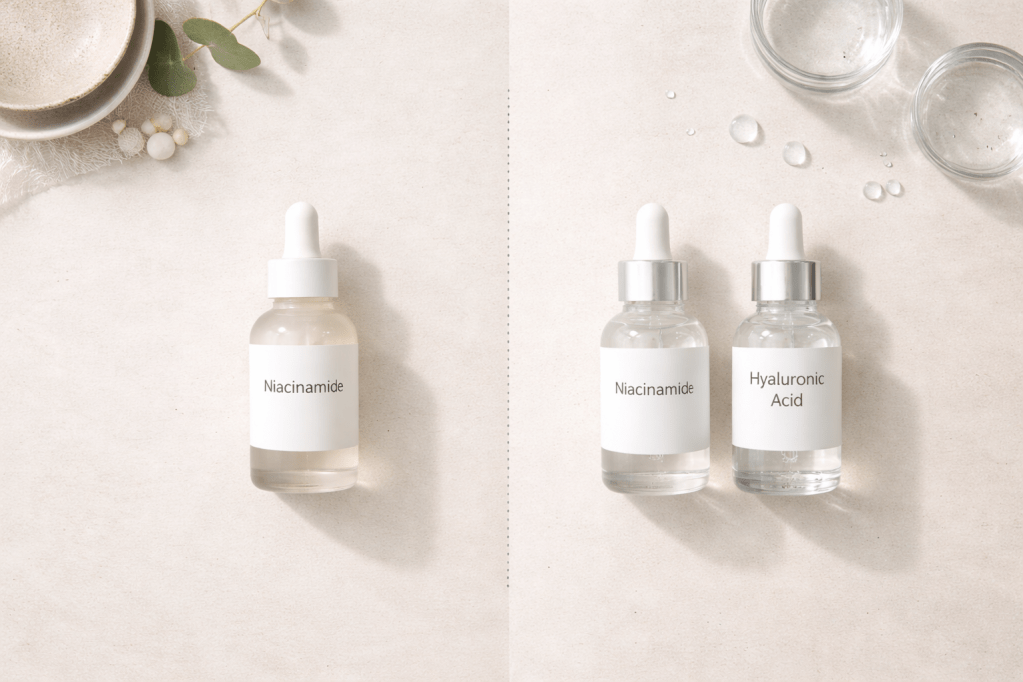
Here’s where things get interesting. For most people, combining hyaluronic acid and niacinamide delivers the best results. This dynamic duo works synergistically: hyaluronic acid pulls water into your skin while niacinamide helps lock that moisture in, regulates oil production, and calms irritation.
You’ll particularly benefit from using both if:
- Your skin is both dehydrated and reactive
- You use potent actives like retinoids or chemical exfoliants that can compromise your barrier
- You want comprehensive skincare that addresses hydration, barrier health, oil control, and tone simultaneously
- You’re dealing with combination skin that’s oily in some areas but dehydrated overall
How to Layer Them in Your Routine
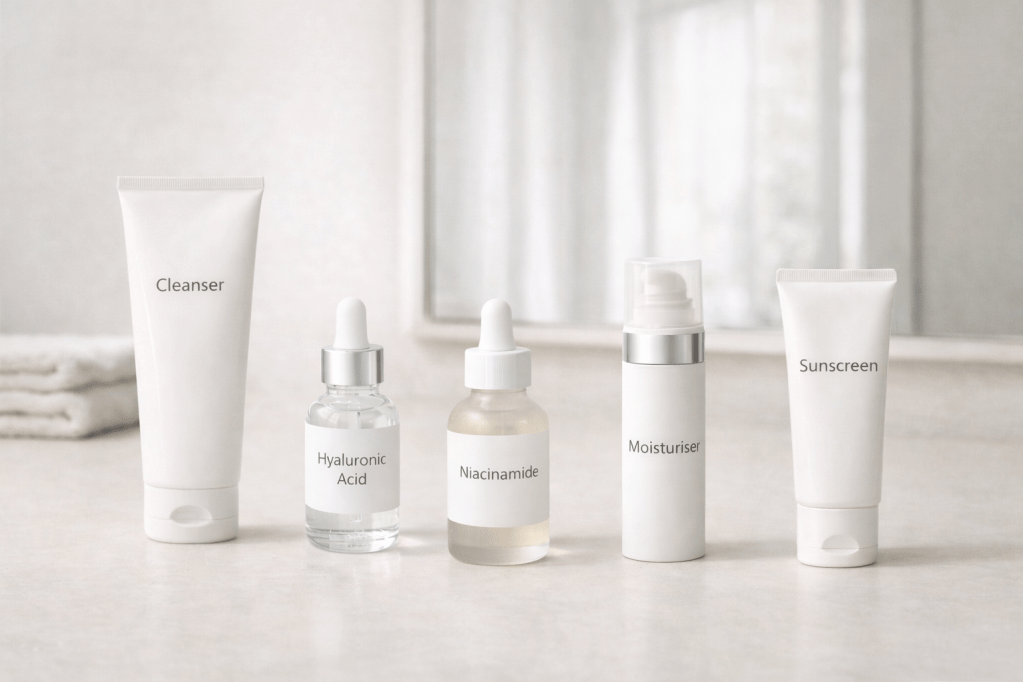
Getting the order right ensures you maximize the benefits of each ingredient. Here’s the simple formula:
Morning and Evening:
- Cleanse your skin gently
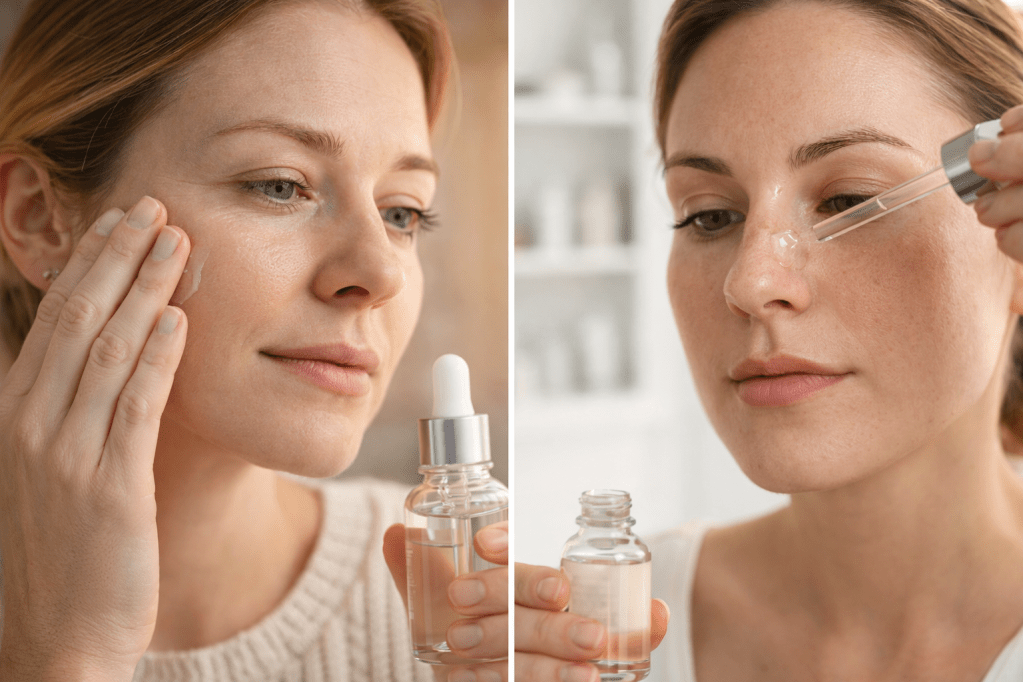
- Apply hyaluronic acid serum while your skin is still slightly damp (this is crucial — damp skin helps HA pull in moisture more effectively)
- Follow with niacinamide in serum form or within your moisturizer to strengthen the barrier and address oil control, redness, or uneven tone
- Seal everything with a moisturizer appropriate for your skin type
- Apply sunscreen every morning (non-negotiable!)
This layering sequence allows the hyaluronic acid to penetrate and hydrate first, then lets niacinamide work on the skin’s barrier and other concerns. Both ingredients play well together and won’t cause irritation or conflict when used in the same routine.
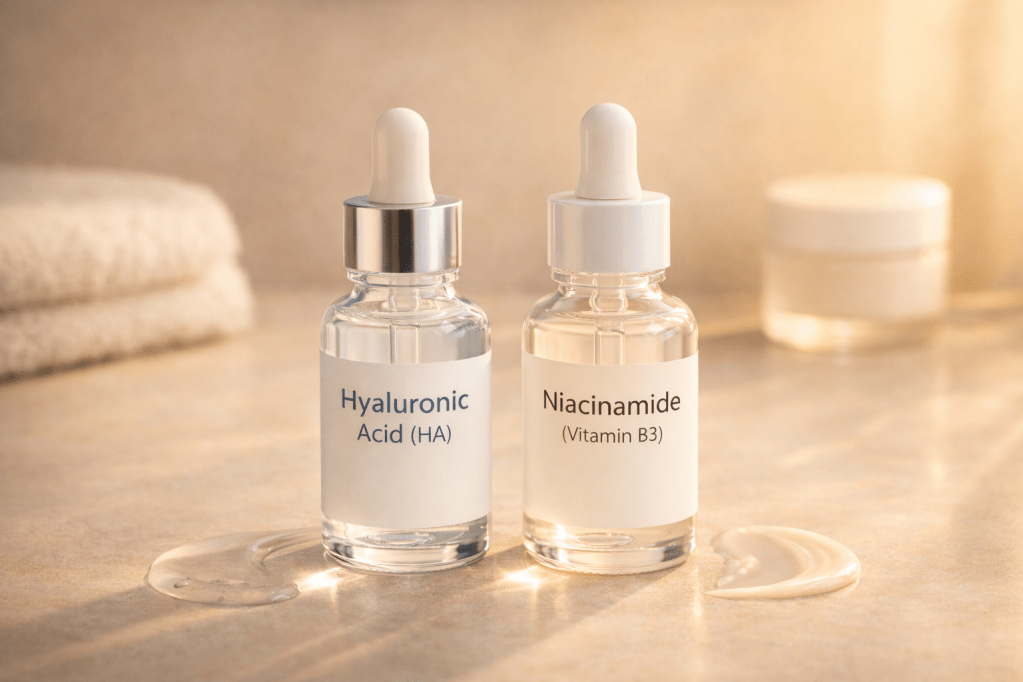
Quick Reference: Side-by-Side Comparison
Main Function:
- Niacinamide: Multi-purpose barrier strengthener, tone corrector, and oil regulator
- Hyaluronic Acid: Powerful humectant for rapid skin hydration and plumping
Best Suited For:
- Niacinamide: Oily, combination, acne-prone skin; redness; uneven tone; enlarged-looking pores
- Hyaluronic Acid: Dry, dehydrated, tight, or dull skin; fine lines; all skin types seeking moisture
Timeline for Results:
- Niacinamide: Gradual improvement over several weeks for tone, texture, and oil control
- Hyaluronic Acid: Often immediate plumping and comfort within hours to one day
Compatibility:
- Both layer beautifully together and work well with most other skincare actives
The Bottom Line
Rather than viewing niacinamide and hyaluronic acid as competing ingredients, think of them as complementary partners that each bring unique strengths to your skincare routine. Hyaluronic acid delivers that instant hydration boost and plumpness, while niacinamide works steadily to improve your skin’s overall health, resilience, and appearance over time.
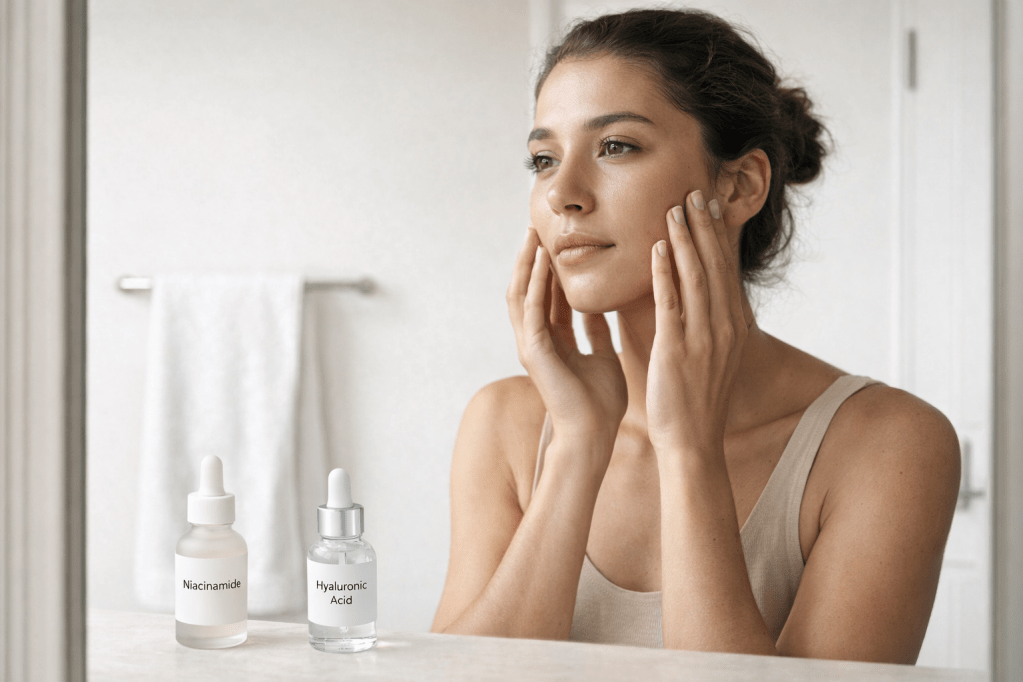
For most people, incorporating both ingredients will yield the most comprehensive benefits. However, if you’re just starting out or working with a minimal routine, you can prioritize based on your primary concern: choose hyaluronic acid for immediate hydration needs and niacinamide for longer-term barrier support and oil control.
Your skin is unique, and what works beautifully for someone else might not be perfect for you. Pay attention to how your skin responds, adjust accordingly, and don’t be afraid to experiment with different formulations and layering techniques. With these two proven ingredients in your arsenal, you’re well-equipped to tackle whatever skin concerns come your way.
You may also like:


 EverGlow Bliss
Leave a comment