
If you’ve spent any time on skincare social media recently, you’ve almost certainly come across the term “skin cycling.” It’s everywhere — and for good reason. But with so many skincare trends promising miraculous results, it’s fair to ask: is skin cycling actually worth your time and money, or is it just another passing fad?
The short answer is that skin cycling is backed by dermatologists and rooted in sound skincare science. Whether it’s right for you depends on your skin type, your current routine, and your goals. This guide breaks down everything you need to know.
Not sure what your skin type is? Check out What’s Your Skin Type? — Quick Quiz
What Is Skin Cycling?
Skin cycling is a structured, repeating four-night skincare routine developed and popularised by New York-based dermatologist Dr. Whitney Bowe. Rather than layering multiple potent ingredients every single night — which can overwhelm and damage your skin — skin cycling intentionally rotates active ingredients with dedicated recovery nights.
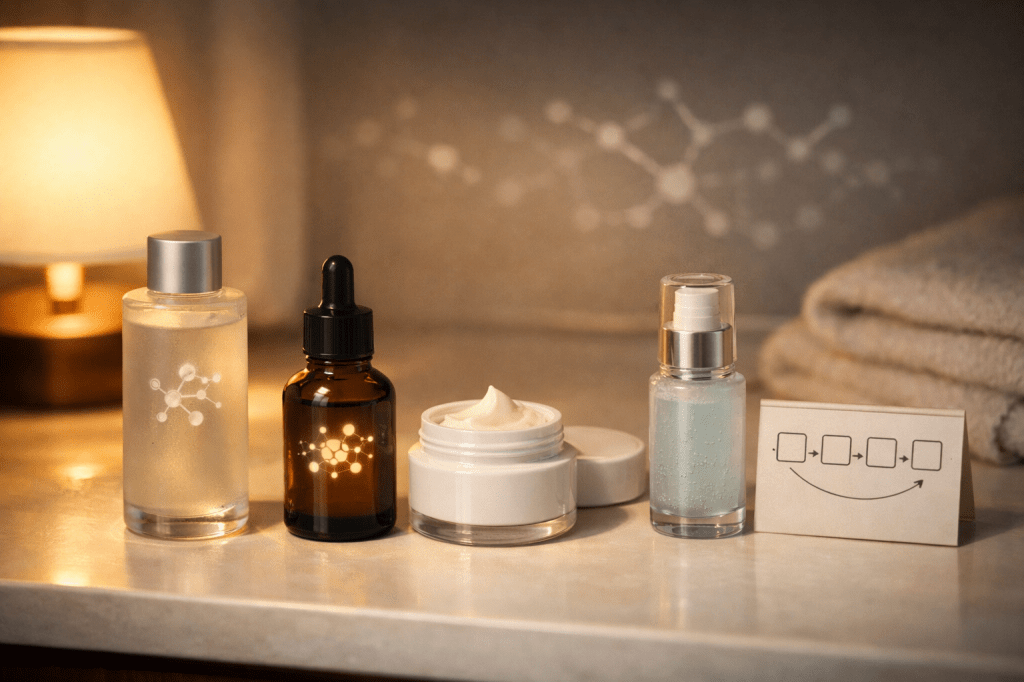
Here’s how a typical cycle looks:
- Night 1 – Exfoliation: After cleansing, apply a chemical exfoliant such as glycolic acid, lactic acid, or a BHA (salicylic acid). These acids dissolve dead skin cells, improve texture, and prep your skin to absorb subsequent products more effectively.
- Night 2 – Retinoid: Apply your retinol or prescription retinoid. This powerhouse ingredient accelerates cell turnover, stimulates collagen production, and tackles fine lines, uneven tone, and acne.
- Nights 3 & 4 – Recovery: Set the actives aside entirely. These nights are all about nourishing and restoring your skin barrier with hydrating, soothing ingredients like ceramides, peptides, and hyaluronic acid.
Once Night 4 is complete, you loop back to Night 1 and begin again. Simple, structured, and strategic.
Why Does Skin Cycling Work?

The logic behind skin cycling is straightforward: your skin barrier can only handle so much. When you use strong actives like retinoids and exfoliating acids night after night without a break, you risk disrupting the skin’s protective lipid layer. A compromised barrier means increased water loss, redness, sensitivity, and even breakouts — the opposite of what you’re going for.
By spacing out the “hard work” nights and allowing your skin two full recovery nights in between, you give your barrier the chance to repair itself. This not only prevents irritation but can actually make your actives more effective when you reintroduce them, since your skin’s receptivity resets during the recovery phase.
The Pros of Skin Cycling
Significantly Reduced Irritation
One of the biggest advantages of skin cycling is how much gentler it is on your skin compared to using actives daily. Burning, stinging, redness, and flaking are common complaints from people who jump straight into nightly retinol or acid use — skin cycling dramatically reduces these side effects by building in natural rest periods.
Improved Skin Texture and Tone
The strategic pairing of exfoliation and retinoid nights creates a powerful one-two punch for skin renewal. Regular exfoliation clears away dead cells and smooths the surface, while retinoids work deeper to boost cell turnover and collagen. Together, they lead to noticeably smoother, more refined skin and a visible reduction in fine lines over time.

A Stronger, Healthier Skin Barrier
The two recovery nights aren’t just “off” nights — they’re doing critical work. Ceramide-rich and peptide-loaded products applied during these nights actively rebuild the skin’s lipid barrier, preventing transepidermal water loss and reducing the inflammation that often comes with active ingredient use.
Clarity and Structure for Beginners
If you’ve ever stared at a shelf full of serums wondering where to start, skin cycling cuts through the confusion. It’s a clear, repeatable framework that takes the guesswork out of combining actives. For anyone new to retinoids or chemical exfoliants, that structure is incredibly valuable.
The Cons of Skin Cycling
It’s Not for Everyone
If your skin already tolerates daily retinoid use without any issues, switching to a cycling approach may actually cause your results to stall. For seasoned skincare enthusiasts whose barrier is already well-adapted to actives, the reduced frequency could mean slower progress.
May Be Too Conservative for Oily or Acne-Prone Skin
People with oily or acne-prone skin often see better results from more consistent retinoid use. Cycling every four nights might not deliver the frequency needed to keep breakouts in check, so those with congestion-prone skin may find a modified approach works better than strict cycling.

An Adjustment Period Is Inevitable
Even with the gentler approach of skin cycling, if you’re brand new to retinoids you should still expect some initial dryness, redness, or sensitivity as your skin acclimatises. This is normal and temporary, but it’s worth knowing upfront so you don’t abandon the routine too soon.
Over-Exfoliation Is Still Possible
Skin cycling doesn’t automatically protect you from misuse. If you choose an exfoliant that’s too strong for your skin type, or skip the recovery nights in the interest of speed, you can still end up with a damaged barrier. The structure only works when you follow it faithfully.
Who Benefits Most from Skin Cycling?
Skin cycling is particularly well-suited for beginners who want a safe, structured way to introduce retinoids and exfoliants into their routine without overwhelming their skin. It’s also an excellent option for people with dry or sensitive skin who have struggled with irritation from daily active use.
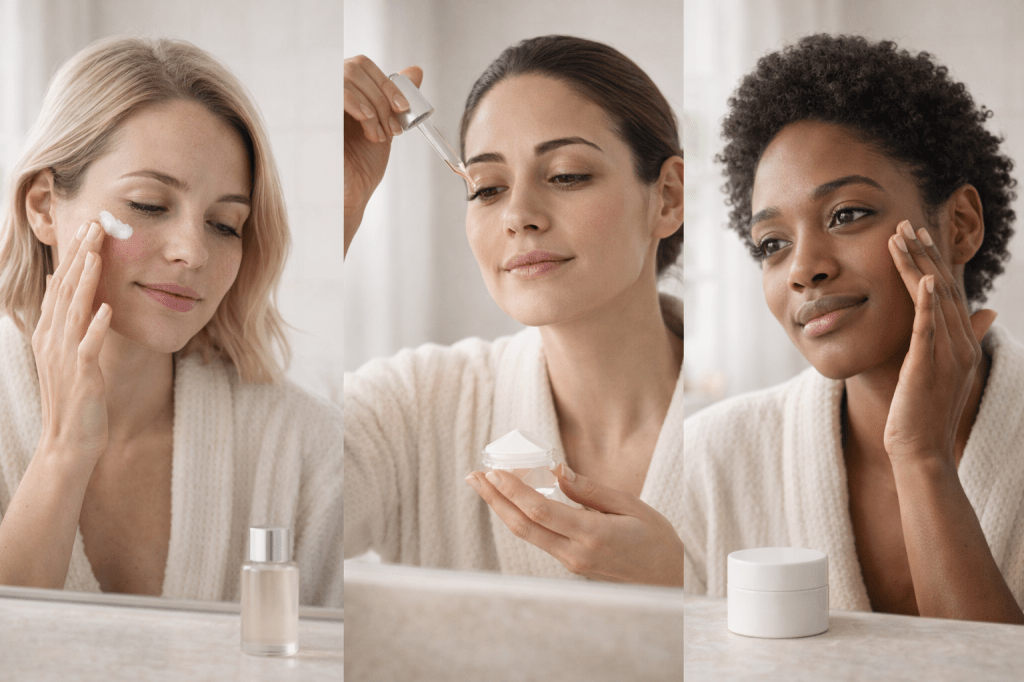
It’s safe across all skin tones, though those with deeper complexions should opt for gentler acids — lactic acid, for example — over stronger options like glycolic acid. This is because more aggressive exfoliants can increase the risk of post-inflammatory hyperpigmentation in darker skin tones.
*Affiliate disclosure: As an Amazon Associate, I earn from qualifying purchases
How to Start Skin Cycling: A Step-by-Step Guide

- Build your starter kit. You’ll need four basics: a gentle cleanser, a chemical exfoliant (AHA like lactic or glycolic acid, or a BHA like salicylic acid), a retinol or retinoid, and a nourishing moisturiser packed with ceramides, peptides, or hyaluronic acid.
- Know your skin before you begin. If you have a skin condition such as eczema, rosacea, or perioral dermatitis, it’s worth consulting a dermatologist before introducing actives — cycling or otherwise.
- Start with low-strength products. Choose a mild retinol (0.025–0.05%) and a lower-concentration AHA to begin. If you find your skin needs more time to adjust, it’s perfectly fine to extend recovery to three nights rather than two.
- Never skip morning SPF. Both retinoids and chemical exfoliants increase your skin’s sensitivity to UV radiation. Daily broad-spectrum sunscreen (SPF 30 or higher) is non-negotiable — this step protects all the work you’re doing overnight.
- Be patient and consistent. Many people notice improved radiance and hydration after just two full cycles (about eight days), but meaningful texture improvements take longer — typically two to three months of consistent practice.
<< See Retinol Serums on Amazon >>
So, Is Skin Cycling Worth It?
Skin cycling isn’t a magic formula, and it doesn’t outperform every other well-designed skincare routine. If your current regimen is already delivering great results without irritation, there’s no urgent reason to overhaul it.

But if you’re dealing with irritation from actives, struggling to figure out how to combine ingredients safely, or just starting out on your skincare journey — skin cycling is genuinely one of the smartest frameworks available. It’s dermatologist-approved, evidence-informed, and designed to help your skin thrive rather than just survive.
Give it a consistent two months and let your skin tell you whether it’s working. Chances are, you’ll be pleasantly surprised.
You may also like:


 EverGlow Bliss
Leave a comment