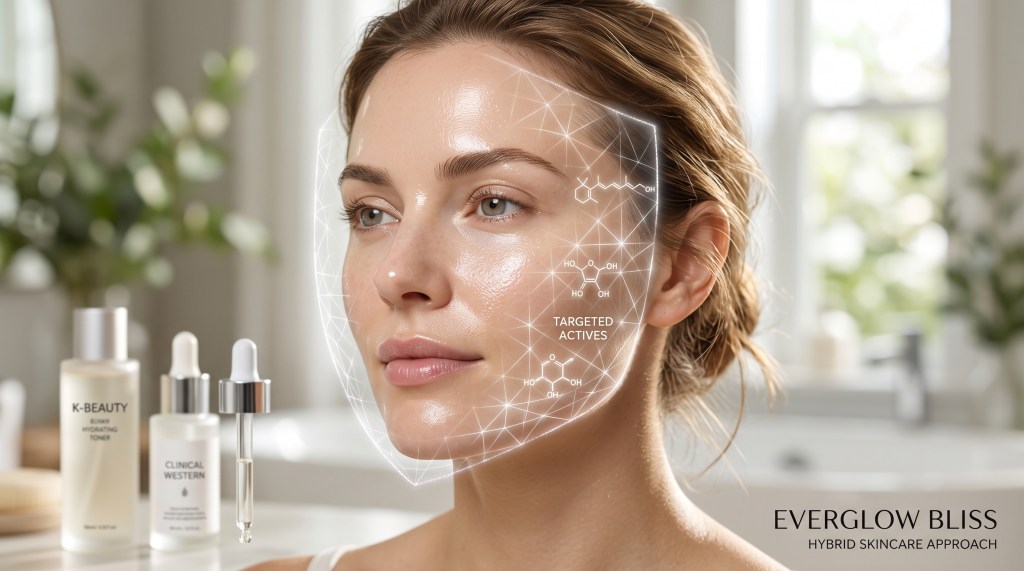
If you’ve spent any time scrolling skincare content lately, you’ve probably noticed two very different camps: the ten-step K-Beauty devotees layering essences and ampoules, and the minimalists swearing by a single potent retinol serum. So which one actually works better?
The honest answer: neither system is objectively superior. K-Beauty and Western skincare are built on different philosophies, and each has genuine strengths depending on your skin type, goals, and how much time you’re willing to spend at the bathroom sink. Let’s break down what actually separates them — and how to borrow the best of both.
Prevention vs. Correction: Two Different Mindsets
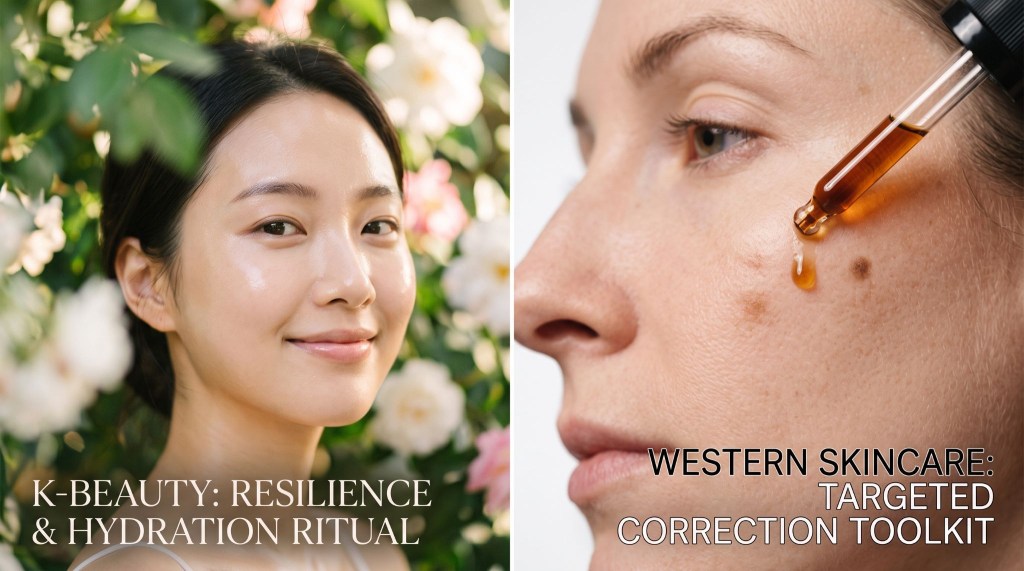
The clearest way to understand the divide is philosophy, not products.
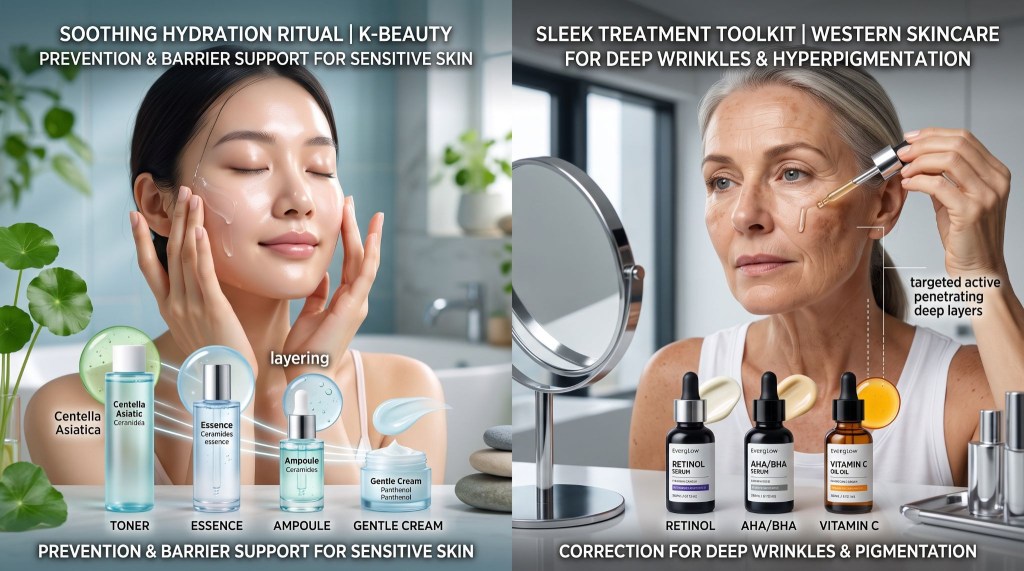
K-Beauty is prevention-first. The goal is a resilient skin barrier and consistent hydration, so breakouts, sensitivity, and premature aging show up less often in the first place. It treats skincare less like a medicine cabinet and more like a daily ritual — small, cumulative steps that add up over months and years.
Western skincare, especially the dermatology-driven brands popular in the US and Europe, leans correction-first. It’s built to treat visible problems — acne, wrinkles, dark spots — using potent, targeted actives. The mindset here is closer to a toolkit: pick the ingredient that solves your specific issue and use it consistently for measurable results.
Neither approach is wrong. One is playing defense, the other offense — and plenty of dermatologists now recommend using both.
Routine Structure: Layers vs. Efficiency
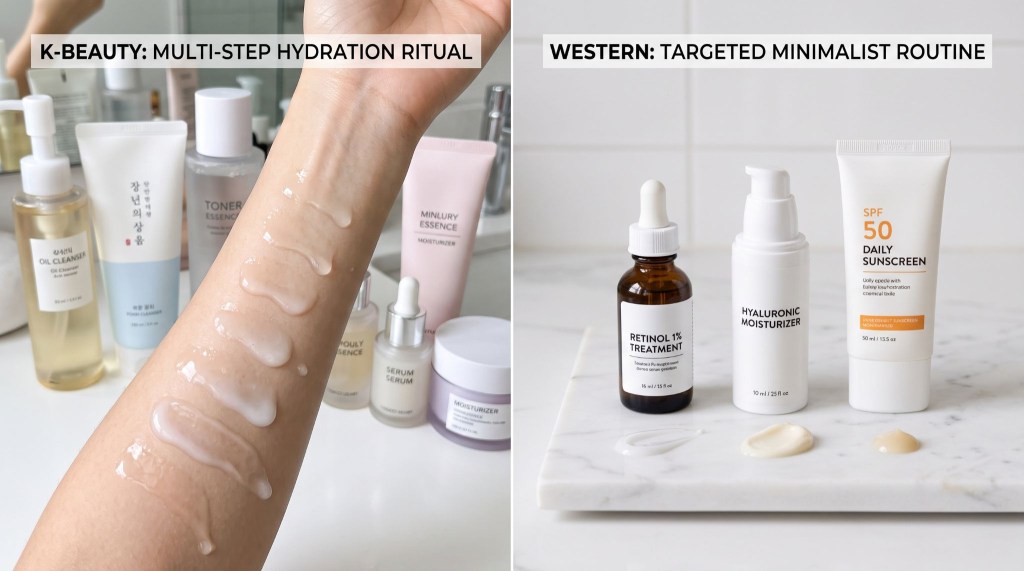
This philosophical difference shows up most obviously in how each routine is built.
A classic K-Beauty routine might run: oil cleanser, water cleanser, toner, essence, serum or ampoule, eye cream, moisturizer, and sunscreen. That’s a lot of steps, but each one is doing a small, specific job — usually hydration, soothing, or gentle brightening — using lightweight, watery textures designed to layer without feeling heavy.
A typical Western routine is far leaner: cleanser, one targeted treatment (think retinol, an AHA/BHA exfoliant, or vitamin C), moisturizer, and sunscreen. Fewer steps, but each product is more concentrated, with textures that lean richer and more “clinical” — formulated for results over sensory pleasure.
Neither structure is inherently better. K-Beauty’s layering suits people who enjoy the ritual and want gradual, gentle improvement. Western minimalism suits people who want an efficient routine built around solving one or two specific problems.
Ingredients and Regulation: What’s Actually in the Bottle
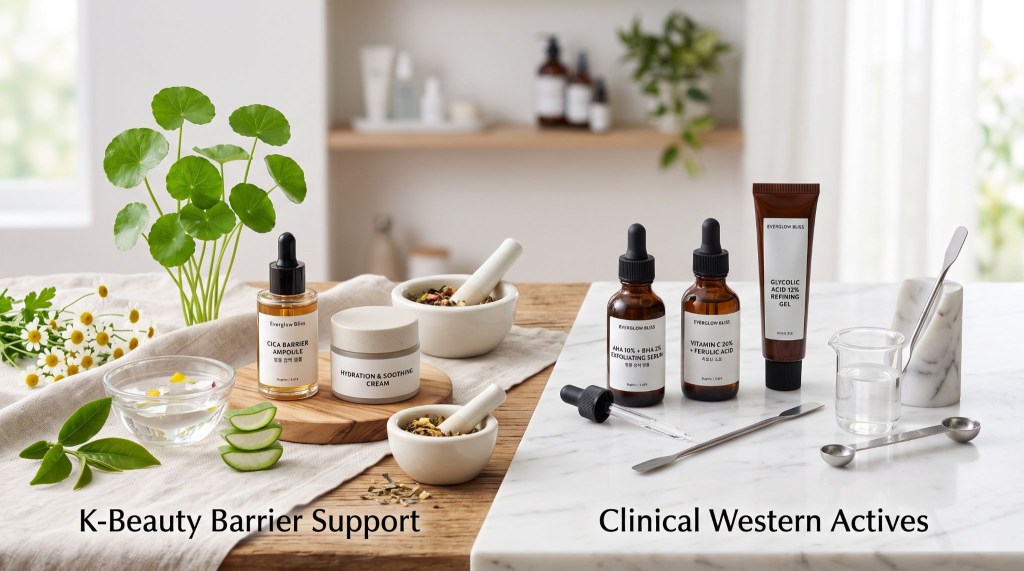
Both systems rely on many of the same star ingredients — niacinamide, hyaluronic acid, retinol, and various acids all show up on both sides of the aisle. The real differences lie in concentration, formulation culture, and regulatory oversight.
K-Beauty tends to lean heavily on soothing, barrier-supporting ingredients like centella asiatica, panthenol, ceramides, and beta-glucan, often at higher concentrations in leave-on products than you’d typically see in Western formulas. Korea’s regulatory system also bans a far longer list of cosmetic ingredients than the US does, which is part of why K-Beauty products often get a reputation for feeling “cleaner.”
Western skincare, meanwhile, has an edge in access to prescription-strength or clinically studied actives — tretinoin, higher-percentage acids, and ingredients like azelaic acid or benzoyl peroxide that come backed by substantial clinical research. Sunscreen regulation also differs: in Korea, UV protection claims fall under a stricter “functional cosmetics” category, while in the US, sunscreens are regulated as over-the-counter drugs, which brings its own rigorous standards.
The takeaway: if you want gentle, barrier-focused formulas, K-Beauty often delivers. If you want clinically proven firepower for a specific concern, Western actives usually win.
So, Which One Is Right for You?
It really comes down to your skin type and what you’re trying to achieve.
Lean K-Beauty if you:
- Have sensitive, dry, or reactive skin that needs gentle, hydrating care
- Care more about long-term barrier health than instant results
- Enjoy a multi-step routine and like experimenting with lightweight products
- Want a sunscreen that layers beautifully under makeup
Lean Western if you:
- Are dealing with acne, deep wrinkles, or stubborn hyperpigmentation and want visible progress
- Prefer a short, efficient routine with fewer products
- Are comfortable using stronger actives like retinoids and acids, possibly under a dermatologist’s guidance
- Want clearly labeled “treatment” products backed by clinical data
The Hybrid Approach: Why Not Both?
Increasingly, skincare experts suggest you don’t have to pick a side. The most effective routines often combine K-Beauty’s hydration and barrier support as a foundation, then layer targeted Western actives on top where they’re actually needed.
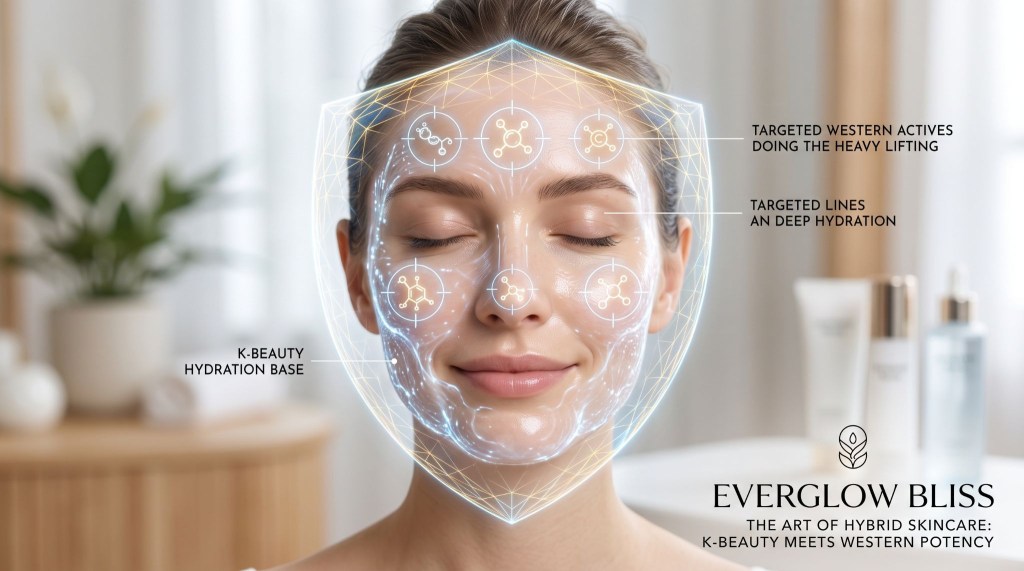
A simple hybrid framework looks like this:
- Base layer: gentle cleanser, hydrating toner or essence, barrier-supporting moisturizer, and daily SPF — all K-Beauty strengths
- Targeted treatment: a Western-style retinoid at night, an AHA/BHA exfoliant a few times a week, and vitamin C in the morning if your skin tolerates it
This gives you resilience and hydration underneath, with proven, concentrated actives doing the heavy lifting on top.
Practical Tips for Choosing or Mixing
Before you overhaul your entire cabinet, keep these guidelines in mind:
- Start with your main concern. Whether it’s dehydration, acne, or pigmentation, pick one or two key actives rather than trying to run both systems in full at once.
- Build tolerance gradually. If you’re new to potent actives, start with gentler K-Beauty formulas, then slowly introduce Western treatments as your skin adjusts.
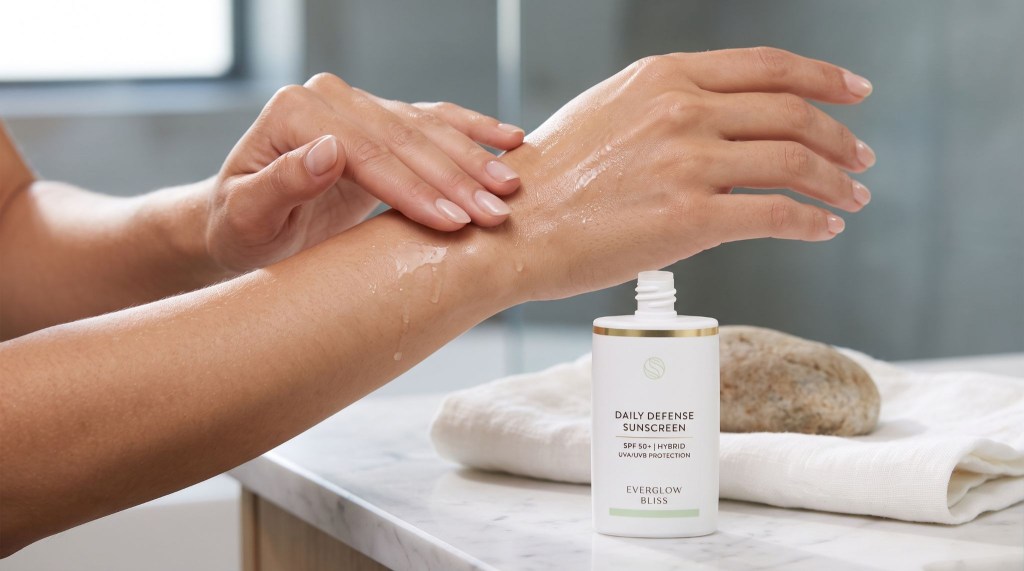
- Never skip sunscreen. Both systems offer excellent options — the difference usually comes down to texture and UV filter preference, not effectiveness.
The Bottom Line
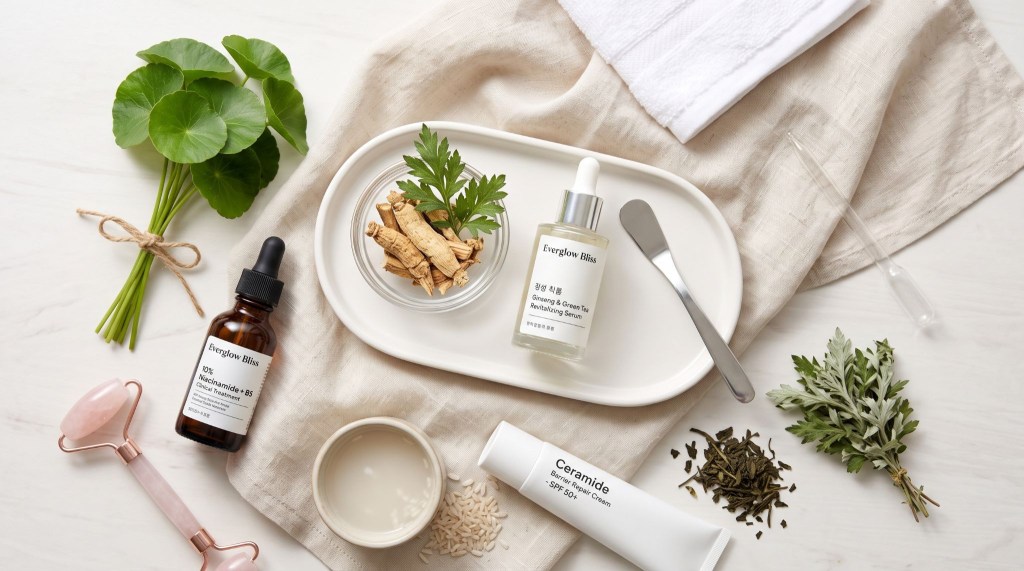
K-Beauty and Western skincare aren’t rivals — they’re two different toolkits solving overlapping problems from different angles. K-Beauty excels at prevention, hydration, and gentle daily maintenance. Western skincare excels at fast, targeted correction backed by clinical research. The smartest routines borrow from both: a soothing, barrier-first foundation paired with proven, concentrated treatments exactly where you need them.
You may also like:



Leave a Reply